
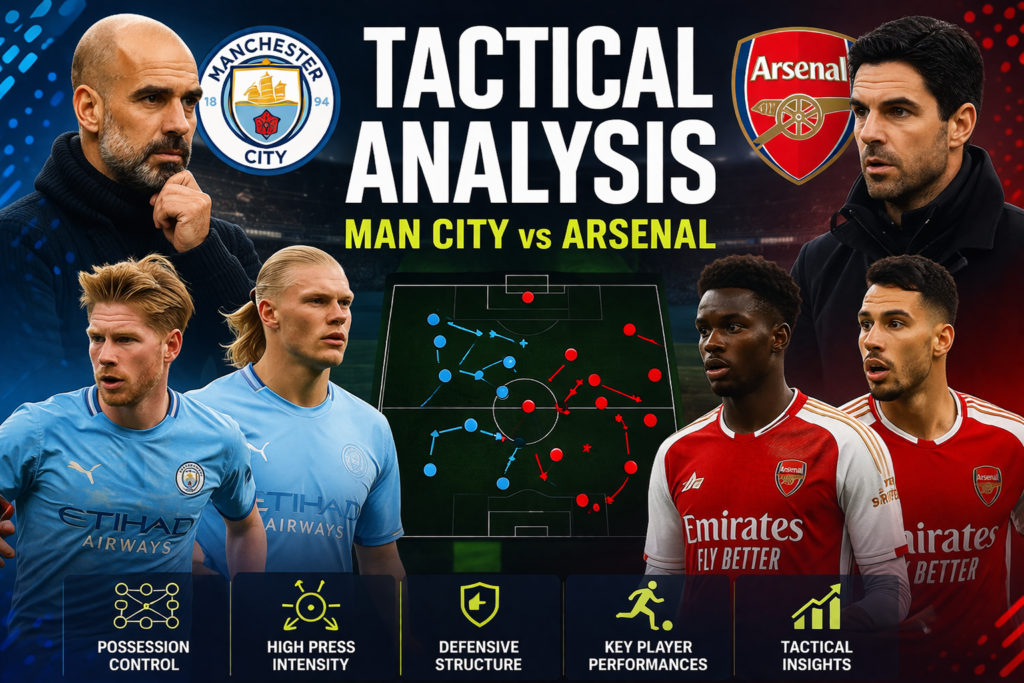
In one of the most anticipated fixtures in the Premier League, Manchester City showcased their tactical superiority with a dominant display against Arsenal. This match was not just about goals, but about control, structure, and intelligent movement across the pitch.
Midfield Control & Possession Play
A key factor in the game was Manchester City’s ability to dominate possession. Under the guidance of Pep Guardiola, the team maintained fluid passing sequences that constantly disrupted Arsenal’s defensive shape.
Players like Kevin De Bruyne dictated the tempo, switching play quickly and exploiting spaces between the lines. Arsenal struggled to press effectively, often leaving gaps that City capitalized on.
Tactical Shape & Pressing
Manchester City operated in a flexible formation that shifted between a 4-3-3 and a 3-2-4-1 during build-up play. This allowed them to:
- Overload the midfield
- Maintain defensive stability
- Progress the ball efficiently
Arsenal, led by Mikel Arteta, attempted high pressing but lacked coordination, leading to defensive vulnerabilities.
Key Player Performances
- Kevin De Bruyne: Controlled the midfield and created key chances
- Erling Haaland: Constant threat with movement and finishing
- Rodri: Provided defensive cover and passing stability
On Arsenal’s side, Bukayo Saka showed flashes of brilliance but was largely contained by City’s disciplined defense.
Defensive Discipline
Manchester City’s defensive structure was equally impressive. They maintained a compact shape, limiting Arsenal’s attacking options and forcing them into wide areas with low conversion chances.
This match highlighted why Manchester City remains one of the most tactically advanced teams in modern football. Their ability to control possession, adapt formations, and execute high-level strategies sets them apart in the Premier League.
For Arsenal, this game serves as a learning curve in improving pressing coordination and defensive organization against elite teams.